The Evolution of Comics: Genres, Structure & Industry Trends
The evolution of genres and story structures in comics reflects changes in the entertainment industry
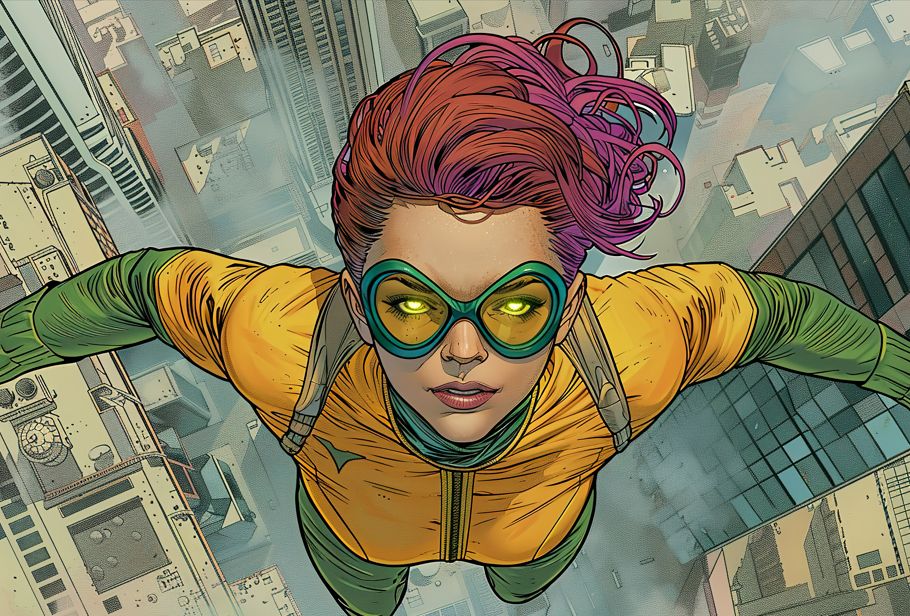
The history of sequential art is not merely a record of illustrated stories – it is a profound reflection of the broader shifts within the global entertainment landscape. From the early newspaper strips of the late 19th century to the multi–billion dollar cinematic universes of today, comics have acted as a cultural barometer, absorbing and refracting the technological, social, and economic trends of their time. The evolution of genres and story structures in comics reflects changes in the entertainment industry, transitioning from simplistic morality tales to complex, fragmented, and interactive narratives that mirror the sophistication of modern digital media.
In the contemporary era, the line between different forms of media has blurred into a state of near–total convergence. We no longer consume comics in isolation; they are part of a vast, interconnected ecosystem that includes film, television, video games, and decentralized digital platforms. This cross–pollination has fundamentally altered how a story is built, how a character is developed, and how an audience is engaged. To understand where the medium is going, one must first look at the structural foundations that have been built, dismantled, and reimagined over nearly a century of creative output.
The Pillars of Narrative Evolution: A Journey Through Time
To understand how comics reached their current state of complexity, we must examine the specific eras that defined the industry. Each stage was characterized by a distinct relationship between the storyteller and the consumer, dictated by the available technology and the prevailing social mood.
Key developmental stages of the medium include:
- The Golden Age (Late 1930s – Early 1950s): Defined by the birth of the superhero archetype and rigid, linear three–act structures. These were stories of moral absolute, designed for mass accessibility and quick consumption on newsstands.
- The Silver Age (Mid 1950s – 1970): A period of scientific wonder and the introduction of flawed, humanized heroes. This era saw the rise of serialized continuity, where actions in one issue had lasting consequences in the next.
- The Bronze Age (1970 – Mid 1980s): The intrusion of social realism and the deconstruction of the hero. Genres blended as horror, sword–and–sorcery, and political thrillers gained prominence, reflecting a more cynical and adult audience.
- The Modern/Copper Age (Mid 1980s – Present): Characterized by “widescreen” cinematic storytelling, psychological depth, and the total integration of digital distribution and interactive formats.
As these stages progressed, the entertainment industry as a whole began to realize that the “user experience” of a narrative was just as important as the plot itself. The transition from the Bronze Age to the Modern era was particularly pivotal, as it coincided with the rise of the digital economy. This shift demanded that all forms of leisure – whether reading a graphic novel or engaging in interactive digital play – offer a higher level of immersion and technological polish.
In this new landscape, consumers in regions with high digital engagement, such as the Latin American market, have become increasingly sophisticated. They seek out environments that are not only visually stunning but also technically secure and narratively rewarding. For example, a modern enthusiast looking for premium digital entertainment might visit a platform like Wincraft Casino, where the user interface and the “Open Case” reward systems are designed to mirror the high–stakes tension and progression mechanics found in top–tier modern comics and eSports. This crossover highlights a fundamental change in the industry: the modern consumer does not just want to observe a story; they want to inhabit an ecosystem that respects their time, offers tangible rewards for loyalty, and utilizes cutting–edge encryption and VPN–friendly protocols to ensure their experience remains private and uninterrupted.
The Architectural Shift: From Episodic to Decompressed Storytelling
One of the most significant changes in comic book structure is the move toward “decompression.” In the Golden and Silver Ages, a single 22–page issue usually contained a complete story. By the late 1990s, influenced by the pacing of big–budget cinema, the industry pivoted toward the “trade paperback” model. Stories were now written in six–issue arcs, designed specifically to be collected into books.
This shift had a profound impact on the entertainment industry’s output:
- Pacing: Narrative beats became slower, allowing for more atmospheric art and deeper character introspection.
- Visual Language: The “widescreen” comic emerged, using horizontal panels and cinematic camera angles to mimic the feel of a movie screen.
- Revenue Models: The shift from disposable pamphlets to prestige books allowed comics to be sold in mainstream bookstores and libraries, fundamentally changing the economic class of the reader.
Decompression allowed creators to treat the comic book page like a film reel. Writers began to focus on the “silence” between the action, using environmental storytelling to convey emotion. This was a direct response to the rising popularity of long–form television dramas and high–production–value video games. The audience had grown accustomed to “bingeable” content, and the comic book industry adapted by creating narratives that felt like episodes of a larger, epic series rather than isolated vignettes.
The “Direct Market” and the Professionalization of Fandom

The 1980s saw the decline of the newsstand and the rise of the specialty comic shop. This change in distribution – known as the Direct Market – allowed publishers to bypass the restrictive censorship of the Comics Code Authority and cater directly to a dedicated fanbase. This professionalization of fandom changed the “story structure” by allowing for “hard” continuity.
When a medium moves from a general audience to a niche, dedicated audience, the complexity of the lore increases exponentially. Writers began to reference events from twenty years prior, creating a rewarding but dense barrier to entry. This mirrored the way the tech industry builds “walled gardens” or ecosystems. To understand the current story, you had to be invested in the brand’s history. This created a fiercely loyal consumer base, which the entertainment industry later leveraged to build the massive movie franchises we see today. The “fandom” was no longer just a group of readers; they were a community of data–driven enthusiasts who tracked every character death, every alternate reality, and every retcon with the precision of a stock market analyst.
The Digital Frontier: Webtoons and the Mobile Revolution
As we moved into the 2010s and 2020s, the physical page began to lose its dominance to the vertical scroll. The rise of platforms like Webtoon and Tapas introduced a completely new story structure designed for the smartphone. This is perhaps the most literal example of how the evolution of comics reflects the technological state of the entertainment industry.
In a vertical–scrolling comic, the “panel” is no longer the primary unit of storytelling; the “scroll” is. The space between panels can be used to control the passage of time or the intensity of a jump–scare. This format is designed for “snackable” consumption – five–minute bursts of narrative during a commute. The story structures here are highly hook–driven, ensuring that every chapter ends on a cliffhanger that encourages the user to spend digital currency to unlock the next part immediately. This is the “gamification” of reading, where the boundary between a comic app and a mobile game is virtually non–existent.
The Psychological Demand for Immersive Leisure
The modern era is defined by “The Attention Economy.” Every digital platform is competing for the same limited hours of a consumer’s day. To compete with the high–fidelity feedback loops of social media and streaming, comics have had to become more than just ink on paper. They have become “lifestyle products.”
The psychological demand for a “premium” experience is universal across the leisure sector. Whether a user is exploring the latest issue of a cyberpunk manga or engaging with a sophisticated interactive environment, the baseline requirement is a sense of “prestige.” Modern entertainment platforms have responded by offering:
- Customization: Allowing the user to choose their own avatars or narrative paths.
- Transparency: Open systems where odds and rewards are clearly defined, such as the “provably fair” algorithms used in high–end digital hubs.
- Progression: Systems that track a user’s journey and reward them for milestones, turning a passive activity into an active accomplishment.
This trend toward active engagement is what links disparate industries. A comic book fan who enjoys the thrill of a rare “variant cover” drop is essentially looking for the same psychological hit as a gamer opening a rare loot box or a strategist calculating their next move on a high–stakes digital platform. The industry has moved away from selling “content” and toward selling “status and excitement.”
Transmedia and the Death of the Original Medium
We are now reaching a point where the “original medium” of a story is irrelevant. A character might debut in a comic, have their backstory explored in a podcast, and their climax resolved in a video game or a live–action film. This transmedia storytelling requires a modular story structure. Creators must build “story engines” rather than “storylines.”
The evolution toward modularity reflects the entertainment industry’s need for “rebootable” assets. If a film fails, the IP can live on in a comic. If a comic becomes a cult hit, it can be adapted into a streaming series. This fluidity has led to a structural phenomenon called “the multiversal loop,” where every version of a story exists simultaneously in different media formats. This satisfies the modern consumer’s desire for “infinite content,” while allowing companies to maximize the lifetime value of every creative idea.
Conclusion: The Horizon of Interactive Narrative
The evolution of genres and story structures in comics has been a century–long journey from the simple to the complex, from the static to the interactive. It has moved in lockstep with the broader entertainment industry, mirroring its obsessions with technology, social justice, and economic efficiency. Today, a comic is not just a book; it is a gateway into a larger digital and cinematic experience.
As we look toward the future – where Augmented Reality (AR) and Artificial Intelligence (AI) will likely allow us to step “inside” the panels – the core principles of storytelling will remain. Humans will always crave a compelling narrative, a hero to root for, and an environment that offers an escape from the mundane. Whether that escape is found in the pages of a graphic novel or through the high–fidelity interface of a platform like Casino Wincraft México, the goal remains the same: to experience a moment of high–stakes drama and narrative resolution in an increasingly complex world. The comic book has survived the radio, the television, and the internet by being the most adaptable medium in history, and its next evolution promises to be its most immersive yet.


What DC Stands For and How It All Began – Full History & Meaning
Read Article
A Startup Without an Office: Can a Scattered Team Actually Work
Read Article
Continue Reading